
Project
Monitoring Ocean Changes in Nunatsiavut
Monitoring Ocean Changes: The PHATE Project
A new research project is beginning work in Nunatsiavut to better understand phycotoxins - natural toxins produced by certain types of algae in the ocean.
These toxins can form during algal blooms and can move through the marine food web. They may build up in shellfish and other country foods. In some cases, they can cause serious illness in people and animals. These toxins cannot be removed by cooking or freezing, therefore monitoring and surveillance for these toxic blooms is essential.
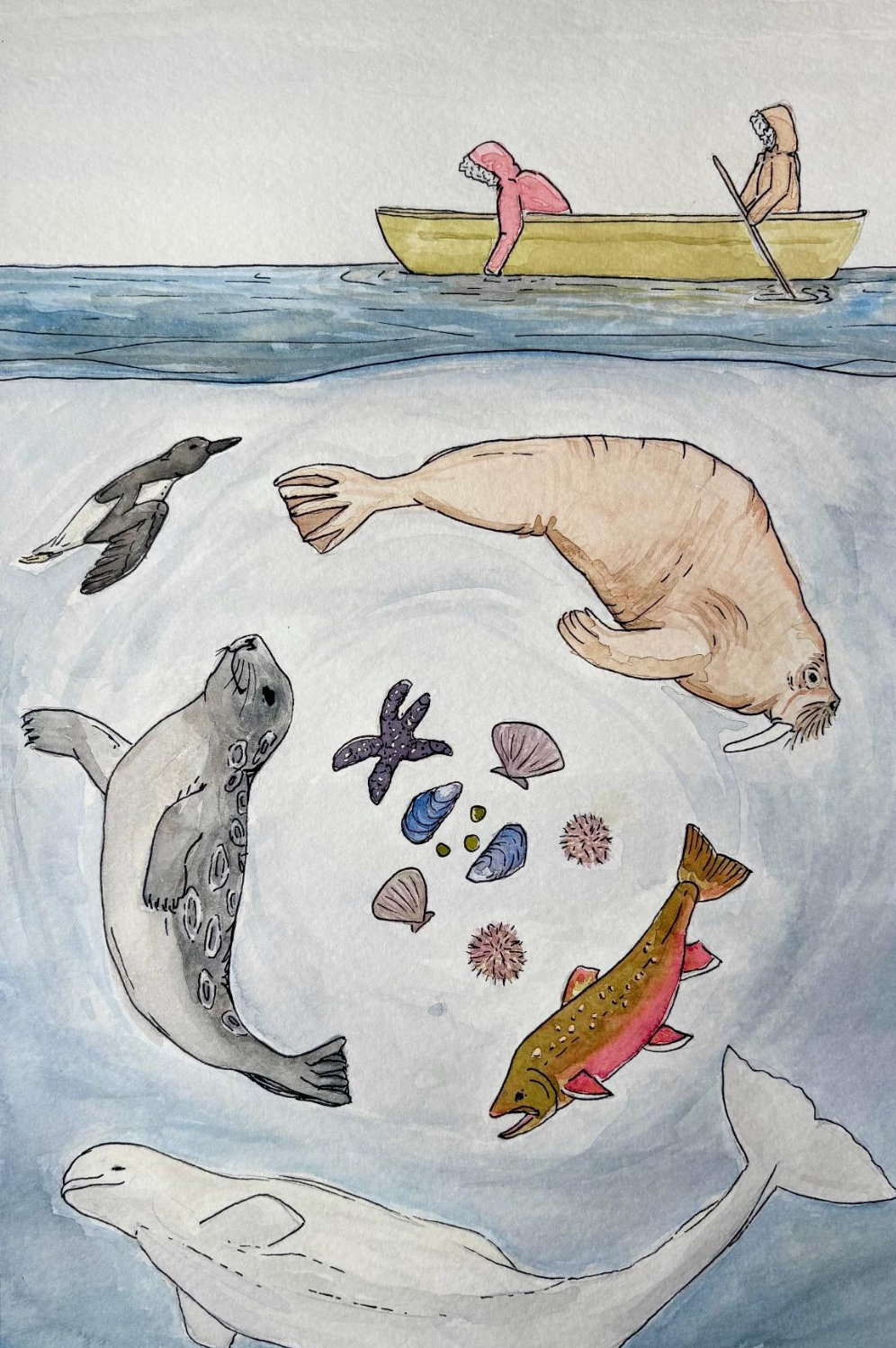
Artwork by Brenna Noble, ArcticNet.
Why this work matters
As ocean temperatures warm, scientists expect harmful algal blooms to become more common in Arctic waters. Monitoring already happens in parts of Alaska and the western Arctic, but there is very little monitoring in the eastern Arctic.
The PHATE project (Phycotoxins in the Arctic Trophic Ecosystem) aims to help fill that gap by studying where these toxins may be present, what conditions are favourable for their development, and how they move through northern marine ecosystems.
Community-based sampling
This spring and summer, sampling will begin in Nunatsiavut in Nain and Postville, with additional sampling in Nunavik and parts of Nunavut.
Community members and local harvesters will play an important role in the project by helping collect samples of wild foods they would like tested. This work will help researchers better understand how phycotoxins move through the food web and what that could mean for Arctic communities.
Partners
The project is a collaboration between the Nunatsiavut Government, Makivvik, and the University of New Brunswick, with additional partners including Université Laval, the Marine Institute at Memorial University, the Nunavik Regional Health Board, and the Canadian Food Inspection Agency, along with international research partners across the Arctic and North Atlantic.
Together, the project will help build knowledge about changing ocean conditions, emerging risks, and response and adaptation mechanisms in Arctic marine environments.